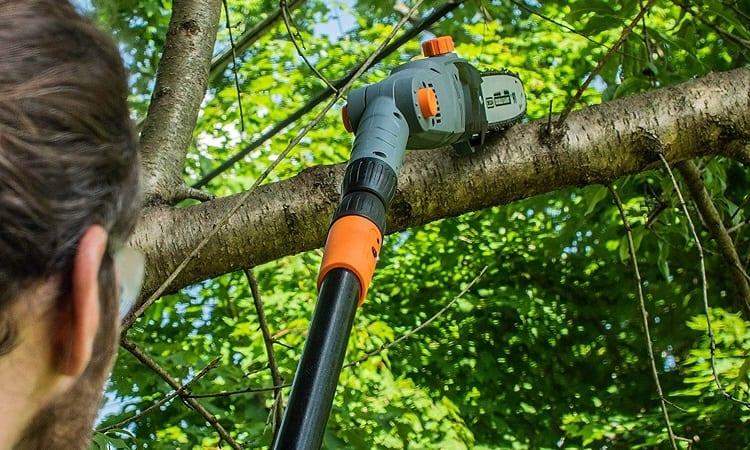
Pole saws are your best ally when it comes to trimming and pruning trees on your own. In just a matter of minutes, these handy tools can make quick work of unwanted or damaged branches, all without having to call in the professionals.
Just like other hand and power tools, the pole saw market in the Philippines is saturated with endless choices, making it a little hard to narrow things down to the best pole saws for your needs.
You’re in the right place. Below, I’ve handpicked six of the best models for 2026, in a few different categories.
I’ll start with the three best picks, and go from there, and then end with some helpful tips for making sure you pick right as I always do my best to help you find the best saw for you.
Let’s get started.
Best Pole Saws Reviews & Recommendations For 2026
Winner – Fiskars Power-Lever Polse Saw
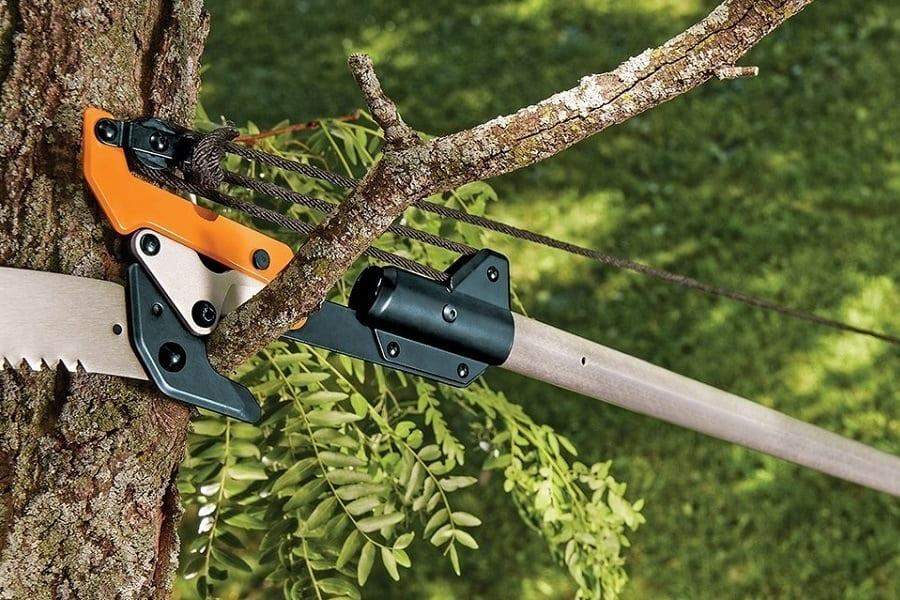
The Fiskars Power-Lever Pole Saw is a high-quality manual pruning tool designed for homeowners and gardeners in the Philippines who want a simple, reliable, and cost-effective solution for trimming trees and maintaining outdoor spaces. Unlike powered pole saws, this model relies on smart mechanical design, giving users full control without the need for fuel, electricity, or batteries.
It is especially popular among users who prefer low-maintenance tools that are lightweight, durable, and capable of handling both light pruning and heavier branch cutting tasks with ease.
Cutting Performance and Applications:
Manual Power-Lever System: Uses a pulley-assisted mechanism to multiply cutting force, making branch cutting easier with less physical effort.
Sharp 15-Inch Curved Saw Blade: Designed for efficient cutting of thicker branches and improved bite into wood surfaces.
Pruning Capacity (Up to ~1⅛” Branches with Shears): Suitable for smaller trimming tasks and general garden maintenance.
Reach and Extension System:
Telescopic Fiberglass Pole (7 to 14 feet): Provides excellent reach for high branches without the need for ladders.
Lightweight Construction (Approx. 5.35 lbs): Easy to handle for extended periods without excessive fatigue.
Double Locking Extension System: Keeps the pole securely locked in place during use for added safety and stability.
Oval Pole Design: Improves rigidity and reduces flexing or swaying when fully extended.
Features and Design:
Integrated Pruner Shears: Allows for quick trimming of smaller branches using a pull-cord activation system.
Pulley-Driven Cutting Mechanism: Increases leverage and reduces effort needed for branch cutting.
Quick-Release Blade System: Enables easy removal or replacement of the saw blade when needed.
Ergonomic Handle Design: Improves grip and control during extended use.
Durability and Build Quality:
Fiberglass Pole Material: Lightweight yet strong, resistant to dents, bending, and weather-related wear.
Weather-Resistant Construction: Suitable for outdoor use in various conditions common in tropical climates like the Philippines.
Balanced Weight Distribution: Improves control and reduces strain during overhead cutting.
Pros:
- No fuel, electricity, or charging required
- Very lightweight and easy to use
- Excellent reach for tall branches (up to 14 ft)
- Dual-function: pruning shears + saw blade
- Strong cutting efficiency with pulley system
- Affordable and low maintenance
Cons:
- Requires physical effort compared to powered saws
- Not ideal for very thick or hardwood branches
- Slower than electric or gas-powered alternatives
- Limited to manual operation only
Suitable For:
The Fiskars Power-Lever Pole Saw is ideal for homeowners, gardeners, and casual users in the Philippines who need a reliable tool for tree trimming, garden maintenance, and light pruning tasks. It is especially well-suited for those who prefer a simple, durable, and affordable alternative to powered pole saws while still needing good reach and cutting efficiency.
Best Gas Pole Saw – Remington RM2599 Maverick
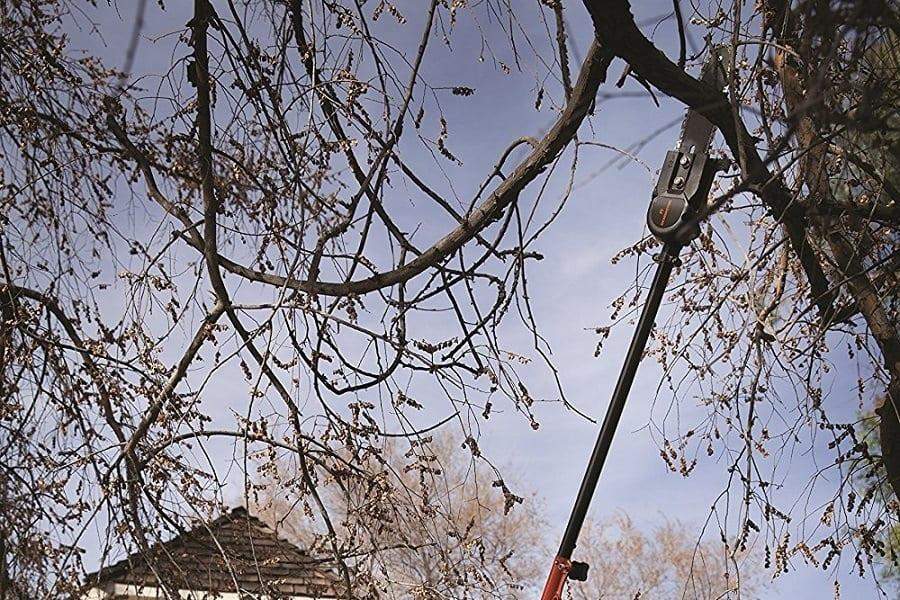
The Remington RM2599 Maverick is a powerful gas-powered pole saw designed for users in the Philippines who need maximum cutting strength and extended reach for heavy-duty tree trimming and yard maintenance. As a gasoline-driven tool, it offers strong performance and cordless freedom, making it ideal for outdoor work where electric or battery tools may not be practical.
This model is built for homeowners and semi-professional users who need to handle thicker branches and more demanding landscaping tasks without relying on electrical power sources.
Cutting Performance and Applications:
25cc 2-Cycle Gas Engine: Delivers strong and consistent cutting power suitable for thick branches and extended outdoor use.
8-Inch Chainsaw Bar: Provides enough cutting length to handle branches up to approximately 6.5 inches thick in a single pass.
High Torque Output: Ensures efficient cutting even through dense or hardwood branches with repeated cuts when needed.
Reach and Extension System:
Extendable Pole (Up to 7 Feet): Allows users to reach high branches without ladders.
Total Reach (Up to ~12.5 Feet with User Height): Suitable for trimming mid to upper tree sections safely from the ground.
Balanced Handle Design: Helps offset engine weight for better control during overhead cutting.
Features and Design:
Auto Chain Oiling System: Automatically lubricates the chain during operation, reducing maintenance and improving cutting efficiency.
Adjustable Front Handle: Allows improved grip positioning for different cutting angles and user comfort.
Chainsaw-Style Trigger Control: Provides familiar handling similar to standard handheld chainsaws or trimmers.
Versatility and Attachments:
Multi-Tool Compatibility: Supports optional attachments such as hedge trimmers, blowers, and edgers for expanded yard maintenance use.
Quick Attachment System: Enables fast switching between compatible tools (depending on configuration).
Portability and Build Quality:
Gas-Powered Portability: No cords or charging required, making it suitable for large outdoor properties.
Weight (Approx. 13.2 lbs): Heavier than electric models but expected for a gas-powered pole saw.
Durable Construction: Built for repeated outdoor use and tougher cutting conditions.
Pros:
- Strong 25cc gas engine for heavy-duty cutting
- No reliance on electricity or batteries
- Good reach for tall branches
- Automatic chain oiling system
- Multi-tool compatibility adds versatility
- Suitable for thick and tough branches
Cons:
- Heavier than electric or manual pole saws
- Requires fuel mixing and engine maintenance
- Louder operation compared to electric models
- Not ideal for indoor or noise-sensitive environments
Suitable For:
The Remington RM2599 is ideal for homeowners, landscapers, and property owners in the Philippines who need a powerful gas pole saw for tree trimming, yard maintenance, and heavy-duty branch cutting. It is especially well-suited for larger outdoor spaces where mobility, cutting power, and independence from electrical outlets are essential.
Best Electric Pole Saw – Sun Joe SWJ800E
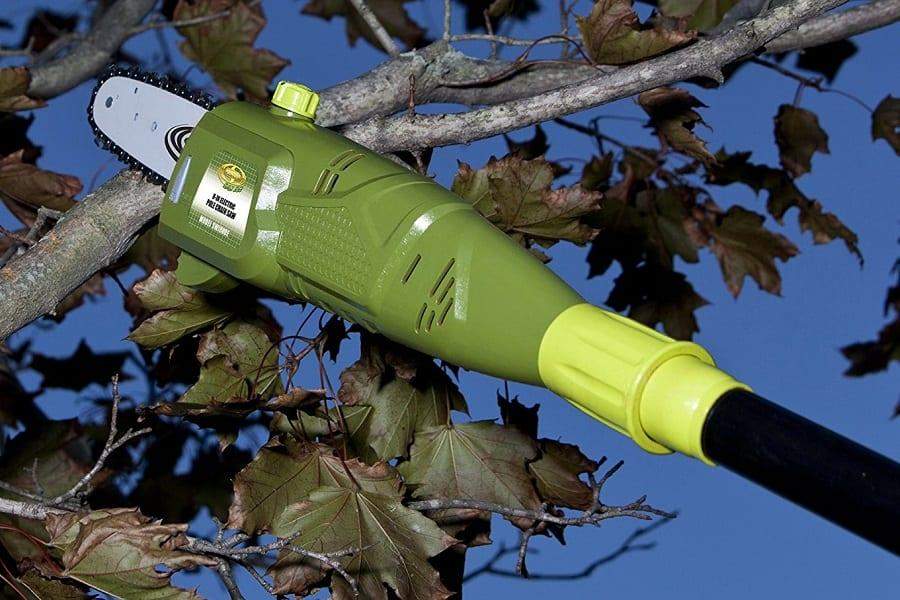
The Sun Joe SWJ700E is a corded electric pole saw designed for homeowners in the Philippines who need a simple, lightweight, and low-maintenance tool for routine tree trimming and yard maintenance. It is best suited for residential users with small to medium-sized gardens who prefer consistent cutting performance without the hassle of fuel or battery charging.
This model focuses on ease of use and practicality, making it a strong entry-level option for everyday pruning and light branch cutting tasks.
Cutting Performance and Applications:
6.5 Amp Electric Motor: Delivers steady cutting power for light to medium-duty trimming around the home.
8-Inch Oregon Bar and Chain: Suitable for cutting branches up to approximately 7.5 inches thick.
Stable Electric Output: Provides consistent performance without engine stalling, fuel mixing, or battery drain.
Reach and Extension System:
Extendable Pole (Up to 8.7 Feet): Allows adjustment based on branch height and cutting needs.
Total Reach (Up to ~14 Feet with User Height): Enables safe trimming of elevated branches from ground level.
Lightweight Build: Reduces fatigue during overhead cutting and extended use.
Features and Design:
Automatic Chain Oiling System: Keeps the chain lubricated during operation for smoother cuts and longer tool life.
Built-in Safety Switch: Helps prevent accidental starts for safer handling and storage.
Simple Trigger Operation: Easy to use, making it beginner-friendly.
Versatility and Applications:
Residential Yard Tool: Ideal for trimming trees, clearing overgrowth, and general garden maintenance.
Corded Electric Operation: Provides unlimited runtime as long as power is available.
Low Maintenance Design: No need for fuel mixing, carburetor cleaning, or battery replacement.
Portability and Build Quality:
Corded Power System: Ensures continuous performance without downtime.
Approx. 7 lbs Weight: Very lightweight and easy to control overhead.
Compact Structure: Easy to store and transport around the home.
Pros:
- Lightweight and easy to handle
- Affordable and beginner-friendly
- Consistent cutting performance
- Automatic chain oiling system
- No fuel or battery required
- Very low maintenance
Cons:
- Limited mobility due to power cord
- Not suitable for large properties without outlets nearby
- No adjustable cutting head angle
- Not designed for heavy-duty professional use
Suitable For:
The Sun Joe SWJ700E is ideal for homeowners in the Philippines who need a simple and affordable pole saw for regular yard maintenance. It is best for residential environments where access to electricity is available and where light to medium trimming tasks are the main requirement.
Runner-Up – WORX WG309
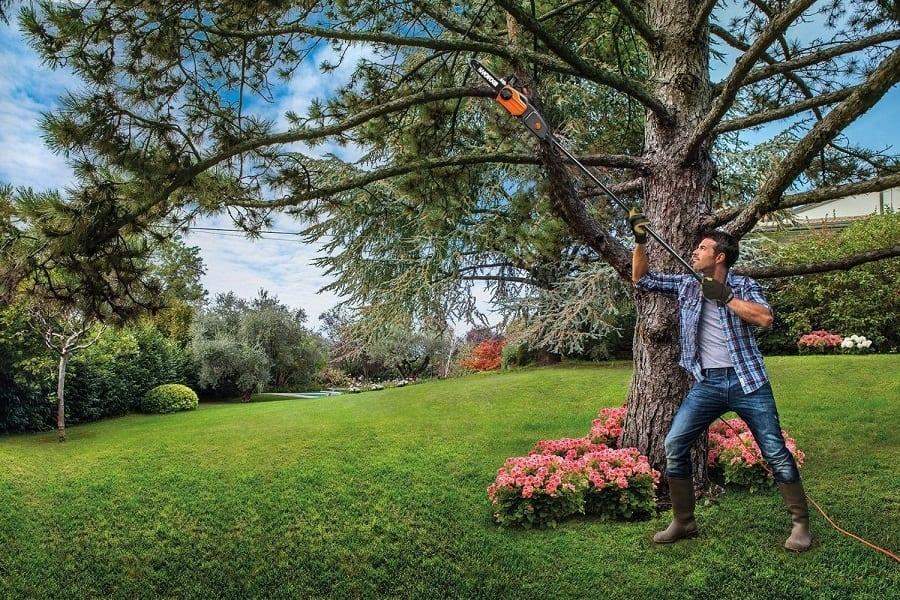
The WORX WG309 is a corded electric pole saw designed for homeowners in the Philippines who want more power, reach, and versatility than standard entry-level models. It is especially suitable for users who need a reliable tool for regular yard maintenance, tree trimming, and occasional ground-level cutting without moving into gas-powered equipment.
This model stands out mainly because of its stronger motor, longer bar, and practical 2-in-1 design that adds extra functionality for everyday outdoor tasks.
Cutting Performance and Applications:
8 Amp Electric Motor: Provides higher cutting power than typical 6–7 amp models, improving torque and cutting speed for smoother performance on thicker branches.
10-Inch Chainsaw Bar: Offers a longer cutting capacity than most electric pole saws, making it more effective for medium to thicker branches.
Efficient Cutting Action: Designed to reduce strain during cutting, helping the chain pass through wood with less resistance.
Reach and Extension System:
Extendable Pole (Up to 8 Feet): Provides above-average reach for electric pole saws in its category.
Total Reach (Up to ~13–14 Feet with User Height): Allows safe trimming of higher branches from the ground.
Stable Extended Balance: Built to maintain control when fully extended for overhead cutting.
Features and Design:
2-in-1 Convertible System: Can be detached from the pole and used as a handheld chainsaw for ground-level cutting.
Rotating Rear Handle: Improves cutting angles and maneuverability in tight or awkward positions.
Automatic Chain Oiling System: Continuously lubricates the chain for smoother cutting and reduced wear.
Versatility and Applications:
Dual Function Use: Works as both a pole saw for overhead trimming and a compact chainsaw for ground tasks.
Efficient Limb Removal: Useful for cutting large branches into smaller, manageable pieces.
Residential Yard Tool: Ideal for home gardens, landscaping, and seasonal tree maintenance.
Portability and Build Quality:
Corded Electric Power: Provides continuous operation without fuel or battery limitations.
Lightweight Design: Easy to handle during extended trimming sessions.
Detachable Pole System: Makes storage and transport more convenient.
Pros:
- Strong 8-amp motor for improved cutting performance
- 10-inch bar handles thicker branches effectively
- 2-in-1 chainsaw and pole saw functionality
- Rotating handle improves control and flexibility
- Automatic chain oiling system
- Affordable and practical for home use
Cons:
- Requires constant connection to a power outlet
- No adjustable cutting head angle
- Less mobility compared to cordless or gas models
- Not suitable for heavy-duty professional forestry work
Suitable For:
The WORX WG309 is ideal for homeowners in the Philippines who want a versatile and powerful corded electric pole saw for regular yard maintenance. It is especially useful for users who want both overhead trimming capability and a secondary handheld chainsaw function in one affordable tool.
BLACK+DECKER LPP120B
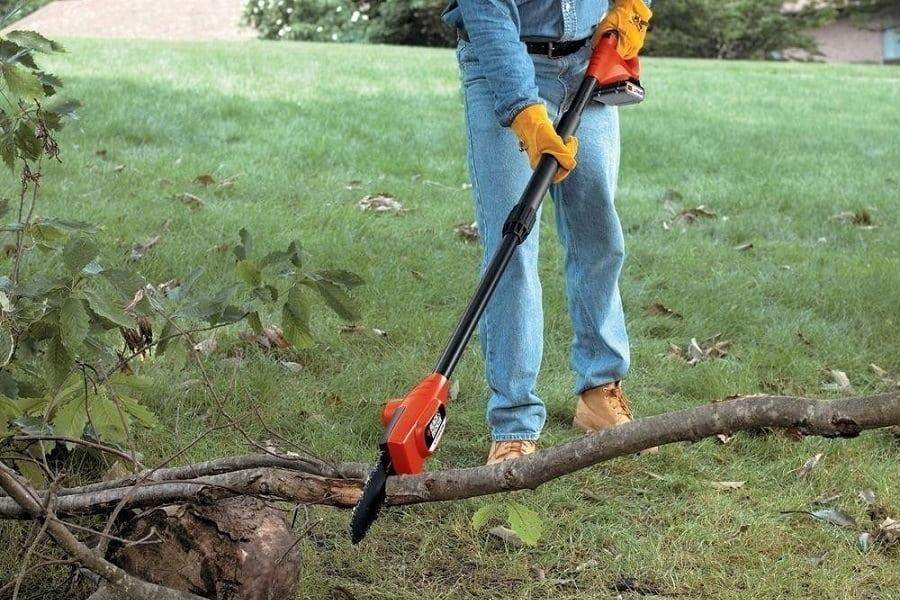
The BLACK+DECKER LPP120B is a cordless pole saw designed for homeowners in the Philippines who want a lightweight, easy-to-use alternative to corded electric models. It is especially suited for users who prioritize mobility and convenience, as it eliminates the need for a power cord while still delivering reliable cutting performance for everyday yard maintenance.
This model fits well within the BLACK+DECKER 20V MAX system, making it particularly useful for users who already own compatible batteries and want to expand their tool collection efficiently.
Cutting Performance and Applications:
20V MAX Lithium-Ion Battery System: Provides consistent power for routine trimming and light-to-medium branch cutting tasks.
8-Inch Chainsaw Bar: Capable of cutting branches up to approximately 6.5 inches thick in a single pass.
Stable Cutting Output: Maintains steady performance during normal residential use without significant power drop.
Reach and Extension System:
Extendable Pole (6.5 to 10 Feet): Adjustable length allows users to adapt to different tree heights and trimming situations.
Total Reach (Up to ~15 Feet with User Height): Provides strong overhead access for most home garden trees.
Lightweight Balanced Design: Reduces fatigue during extended overhead cutting.
Features and Design:
Manual Chain Oiling System: Requires periodic manual lubrication instead of automatic oiling, keeping the design simple and low-maintenance mechanically.
Cordless Operation: Removes cable restrictions and improves freedom of movement.
Compact, Detachable Structure: Easier to store and transport compared to bulkier gas or corded models.
Versatility and Applications:
Battery Platform Compatibility: Works with BLACK+DECKER 20V MAX batteries (sold separately in some versions).
Residential Yard Maintenance Tool: Ideal for pruning trees, trimming branches, and general garden upkeep.
Cordless Convenience: Suitable for larger yards where power outlets are not easily accessible.
Portability and Build Quality:
Ultra-Lightweight (~6 lbs): Easy to maneuver even during extended overhead use.
Low Fatigue Operation: Reduced weight helps minimize strain during longer trimming sessions.
Compact Storage: Fits easily in small storage spaces like sheds or garages.
Pros:
- Cordless design for full mobility
- Lightweight and easy to control
- 8-inch bar handles most home branch sizes
- Long reach up to ~15 feet
- Compatible with BLACK+DECKER 20V MAX battery system
- Affordable entry into cordless pole saws
Cons:
- Battery and charger may not be included
- Manual chain oiling required
- No adjustable cutting head angle
- Not suitable for heavy-duty professional use
Suitable For:
The BLACK+DECKER LPP120B is ideal for homeowners in the Philippines who want a simple, lightweight cordless pole saw for regular yard maintenance. It is especially useful for users already within the BLACK+DECKER 20V MAX ecosystem and those who value mobility and ease of use over advanced features or heavy-duty cutting power.
If you’re dead set on a cordless model, make it this one.
SWJ803E-CMO
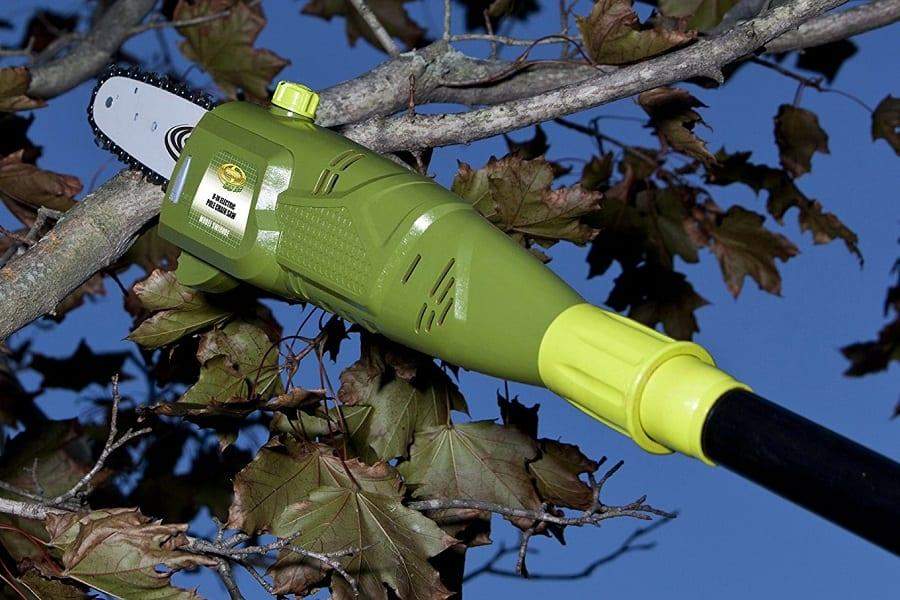
The Sun Joe SWJ803E-CMO is a corded electric pole saw designed for homeowners in the Philippines who want a balance of strong cutting performance, extended reach, and ease of use at an affordable price. It is best suited for residential yard maintenance, especially for trimming medium to larger branches without the complexity of gas engines or battery charging.
This model is ideal for users with access to outdoor power outlets who need a reliable tool for seasonal pruning, tree shaping, and general garden upkeep.
Cutting Performance and Applications:
8-Amp Electric Motor: Delivers strong, consistent power for cutting through thicker branches with minimal slowdown.
10-Inch Guide Bar: Provides greater cutting capacity than many standard electric pole saws.
Up to ~9.5-Inch Cutting Capacity: Capable of handling relatively thick branches in fewer passes.
Reach and Extension System:
Telescoping Pole (Up to 7.2 Feet): Adjustable length allows flexibility for different trimming heights.
Maximum Reach (~12–15 Feet Depending on User Height): Suitable for most residential tree maintenance tasks.
Adjustable Cutting Head (0–30°): Enables angled cutting for improved access and safer trimming positions.
Features and Design:
Automatic Chain Oiling System: Continuously lubricates the chain during operation for smoother cutting and reduced wear.
Safety Lock Switch: Helps prevent accidental startup during handling or storage.
Cord Retention Hook: Secures the power cord to reduce accidental unplugging during use.
Tool-Free Adjustments: Designed for simple, user-friendly operation and maintenance.
Portability and Build Quality:
Corded Electric Operation: Provides unlimited runtime as long as power is supplied.
Lightweight Build (~7–8 lbs): Easy to control during overhead trimming.
Low Maintenance Design: No fuel mixing, carburetor issues, or battery charging required.
Pros:
- Strong 8-amp motor for reliable cutting performance
- 10-inch bar handles thicker branches effectively
- Adjustable cutting head improves flexibility and control
- Automatic oiling system reduces maintenance effort
- Lightweight and easy to handle
Cons:
- Requires extension cord for operation
- Limited reach for very tall trees
- Not suitable for remote locations without electricity
Suitable For:
The Sun Joe SWJ803E-CMO is ideal for homeowners and gardeners in the Philippines who need a powerful yet affordable corded electric pole saw for regular yard maintenance. It is especially useful for trimming mid-height to higher branches where ease of use, consistent power, and safety features matter more than portability or gas-powered performance.
Why Should You Buy A Pole Saw?
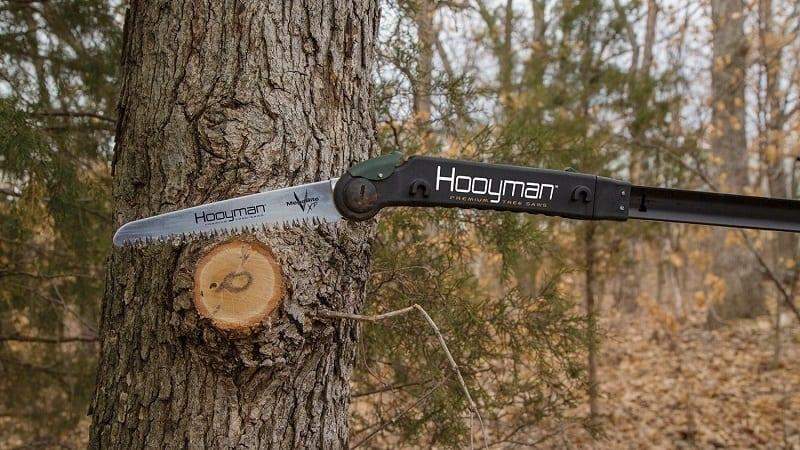
Pole saws aren’t usually the first thing most people think of when buying power tools, and that’s understandable to some extent. Drills, circular saws, and maybe even a nail gun often come first on the list, which makes sense.
However, if you have trees on your property in the Philippines, you’ll eventually need a proper way to maintain them—especially if you want to avoid safety hazards and keep them healthy and well-shaped. There are several ways to handle this, but pole saws remain one of the most practical solutions for many homeowners.
Saves Money
There’s no question that you can always call a professional landscaper or arborist when you need tree limbs trimmed, and they will always do a great job, but the costs can add up quickly over time.
Now, there are situations where you really should call a professional—such as when there are multiple damaged branches, trees near power lines, or when the problem areas are very high and unsafe to reach. But in most cases, around 80–90% of basic trimming and pruning can be done on your own.
Most good-quality pole saws cost anywhere from around ₱3,000 to ₱8,000, depending on the model and type. That’s often still cheaper than paying for a single professional visit. A one-time purchase can end up saving you a significant amount of money in the long run.
Convenient
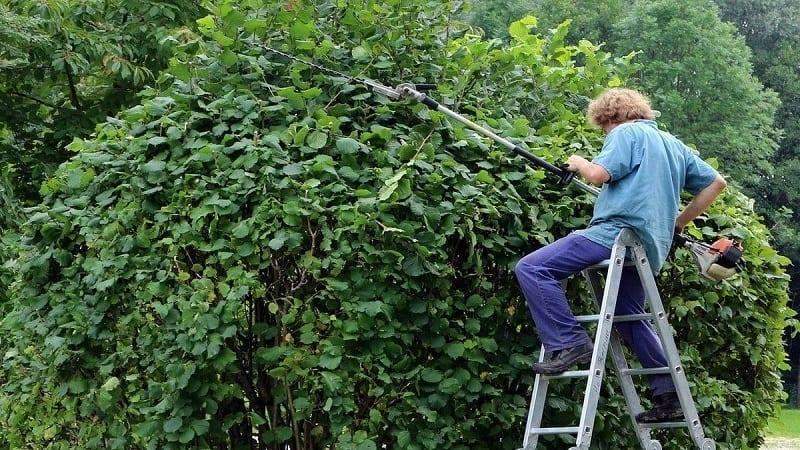
Another big reason to get a pole saw is the convenience it offers. Even if you don’t mind calling a professional from time to time in the Philippines, having a pole saw at home means you can handle the problem right away when it comes up.
This is especially useful when you suddenly notice broken or hanging branches after a storm, or when you simply need to trim your tree to let more sunlight through and help nearby plants grow better.
Or, you can be like my dad and trim off the lowest branches in the backyard because I kept climbing the tree at a very young age and getting stuck all the time—even after being told not to.
Either way, having a pole saw on hand gives you the freedom to do quick yard maintenance anytime your trees or other plants need attention.
Safer
People have been cutting tree branches in different ways for years. Some of the older methods involved climbing into the tree with a small saw and cutting branches by hand.
Of course, not everyone is comfortable climbing trees just to do maintenance. Others try using ladders or step stools, which can also be risky if not done properly.
The truth is, climbing trees or cutting branches from a ladder is not safe. A pole saw allows you to stay firmly on the ground while trimming, which is by far the safer and more stable option.
So instead of risking a fall just to deal with an annoying branch, it’s much smarter to use a pole saw and handle the job safely from the ground.
Aspects To Be Mindful Of When Choosing A Pole Saw
Pole saws all have a similar build and function, but there are some core characteristics that you need to go over first before shopping.
Doing so will prepare you to sort through the choices while ensuring that you get a product that meets all of your needs and expectations.
Power Or Manual
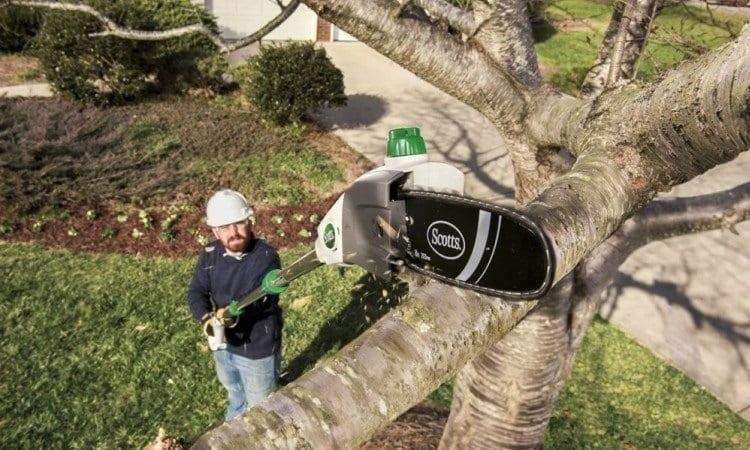
This is always the ongoing debate when it comes to pole saws. Both manual and powered versions have their own advantages, but also come with a few trade-offs.
Manual pole saws are the more traditional option and usually come with both a saw blade for thicker branches and clippers for smaller branches that are just over an inch in diameter.
Manual models also tend to offer longer reach in many cases, allowing you to access branches several feet higher without much complexity. On top of that, the cutting action is generally gentler on tree limbs, which can help reduce the chances of damage or infection entering the cut area.
The downside, of course, is that all the cutting power comes from you, which not everyone has the time, strength, or patience for—especially in hot and humid conditions like in many parts of the Philippines.
Powered pole saws, on the other hand, use either gas or electricity to handle the cutting work, and typically feature a small chainsaw-style bar at the end. They’re popular because you simply switch them on and guide the blade into the branch.
However, these powered tools usually come at a higher price and require more maintenance over time. They’re also not as precise for light pruning work, since the chainsaw bar is more aggressive by design.
So, if you’re leaning toward a more hands-on, budget-friendly approach and don’t mind doing the work yourself, a manual pole saw is a solid choice. If you need more power for thicker branches and regular yard maintenance, a powered pole saw is the better option.
Personally, having both covers almost every situation.
Blade Size
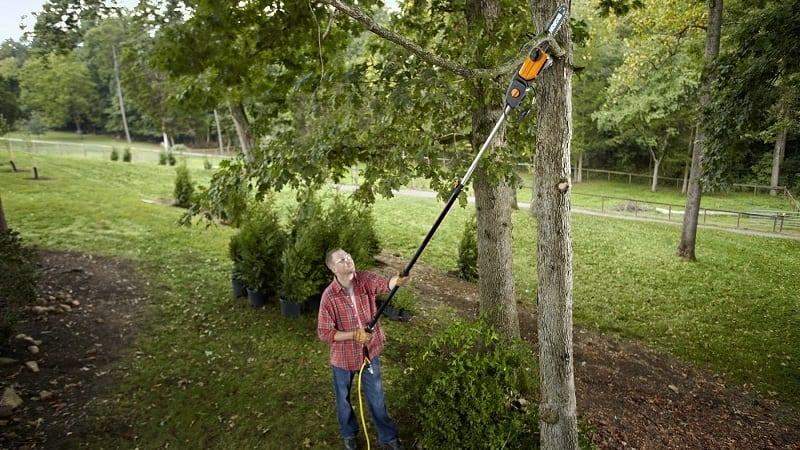
Blade size matters regardless of what type of saw you’re using. For manual pole saws, a longer blade makes it easier to handle thicker branches and also improves cutting efficiency with each stroke.
For powered models, the exposed bar length determines your actual cutting capacity. So if you have an 8-inch bar with about 7 inches of usable cutting area, you’ll generally be limited to branches that size or smaller in a single pass.
In simple terms, bigger saw bars make cutting larger branches much easier and less time-consuming.
As a general guide, try to look for powered pole saws with at least an 8-inch bar length. All of the models featured above meet or exceed that standard.
Pole Length
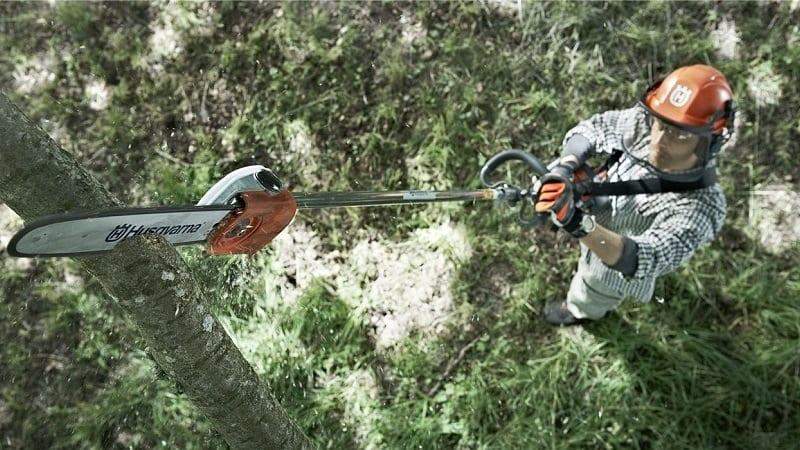
You obviously want to actually reach those tree branches, right? That’s the whole point of using a pole saw.
Pole length is one of the biggest differences you’ll notice between models. Most extendable pole saws use a telescoping design, so you can adjust the length quickly and lock it into place when needed.
You’ll often see a “maximum reach” spec listed, but keep in mind this is not just the pole length itself. Maximum reach usually combines the full pole extension plus the average user’s height.
In most cases, manufacturers estimate this by adding around 5 feet to the pole’s maximum length.
Manual pole saws can vary quite a bit, typically ranging from about 7 to 15 feet, sometimes even more. For powered models, it’s generally a good idea to choose one with at least a 7-foot pole length for practical use.
Extra Features
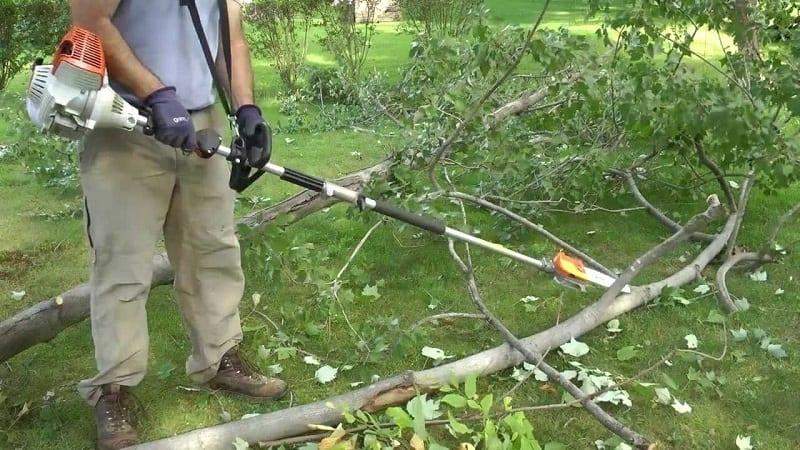
Everyone loves having a few extra features to make things a little easier.
At a minimum, you’ll want a pole saw with an extendable pole, clippers if it’s a manual version, and that’s pretty much it.
Extra features can include things like automatic chain lube mechanisms, safety switches, ergonomic grips, adjustable saw bar angles, removable poles, and more.
All of these offer specific advantages that can improve the accuracy, safety, and ease of your tree trimming and pruning.
Types Of Pole Saws
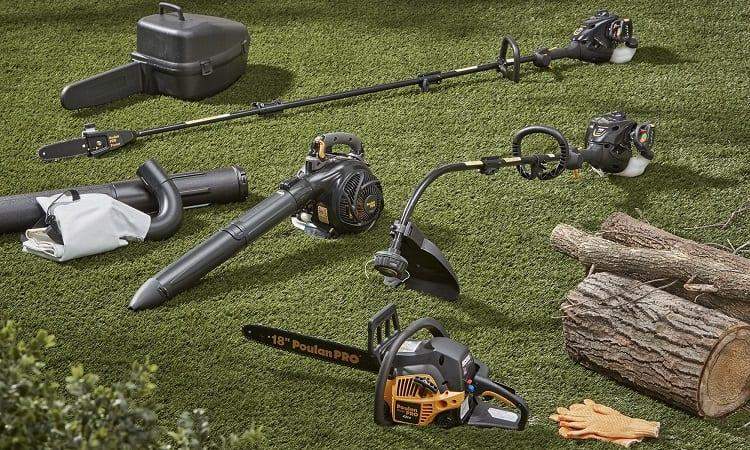
Pole saws are definitely simplistic tools for the most part, but they can be classified in a number of different ways, many of which involve different power sources, blade styles, and how they are even used in the first place.
Gas-Powered Pole Saw
Often the most heavy-duty of pole saws, gas-powered models are usually the most powerful, and the most popular choice of professional landscapers. They are very mobile, typically easy to use, and offer a high amount of cutting power versatile enough for many different scenarios.
These pole saws have a gas-powered engine on one end, with a small chainsaw blade on the other. Pole length is dependent on the model, but 6 feet is usually a minimum for most, with some extending even further.
Gas-powered models are similar to gas weed eaters in how they operate. The engine style is basically the same, as is the operation: prime the engine (if needed,) pull the cord to get the engine going, and then use a trigger to supply different levels of power to the blade at the end.
These types offer a lot of mobility, and can operate for long periods of time in between fuel refills, part of the reason many professionals prefer to use them for larger limb clearing and trimming around a property.
Electric Models
Electric pole saws come in a few different types, but all of them are powered by electricity instead of gas. Again, like their gas-powered counterparts, they have a similar build to a weedeater, only the engine doesn’t rely on combustible fuel.
Sizes and reaches of electric pole saws can vary, but you’ll find professional level models that extend to around 6-10 feet for the most part. Like other models that aren’t manually powered, the engine portion of the saw is on the bottom, which also connects to a trigger that controls blade speed.
Corded Or Cordless?
Electric pole saws come in corded and cordless models. For most, it’s a matter of preference, as the two don’t vary all that much in size and power.
Corded models have a little more power and an infinite power supply, so these are often suitable for those with average-sized yards who only need to cut down a limb or two every now and then. The power cord restricts mobility some, but this is usually not an issue.
Cordless pole saws use a rechargeable battery pack like you’d see with a power drill, for instance. These have a limited amount of charge, so you can’t use them for extended periods. You do have the advantage of being fully mobile, but the battery can wear down quick.
These are often less powerful than corded models too, but not always.
Pole Saw Attachment
As I’ve already highlighted, pole saws that aren’t manually powered are more or less smaller chainsaws on the end of a pole. If you’re trying to use a pole saw to chainsaw something on the ground in front of you, you’re going to have a hard time with a pole in the way.
This is more suited for a conventional standalone chainsaw of course, but there are certain models that are 2-in-1 saws, one being a standalone saw, and an attachment that allows you to extend it as any other pole saw.
These are easily the most versatile models, as you can use them up high, and on the ground for tasks like chopping up a large branch, or whatever else you want to use a chainsaw for.
Due to the pole saw attachment, these saws are often not very big or heavy, which does mean a decrease in power and ability to an extent. Still, the versatility and power level is the perfect combination for many buyers.
Manual Action Pole Saw
Manual models are the oldest and most reliable models, and often better suited for certain types of sawing and situations. Pole saws are definitely a little primitive in design, but that works to their advantage.
The basic model is a long pole with a curved hacksaw blade that has longer teeth — better for cutting wooden branches. The pole can be extendable to varying lengths, but the cheaper models sometimes have just one long size.
To saw, the user simply holds the pole and manually saws a branch by hand. Tedious? For sure, but there are some advantages to this.
For one, the ability to handsaw a branch gives you a better amount of control as to how it’s cut, which comes in handy when trimming and pruning trees without damaging them. Every professional arborist has a manual pole saw; you can bet on that.
Depending on the model, the pole saw might have clippers on end as well, which can be used to make quick cuts on smaller limbs.
Hydraulic Pole Saw
Hydraulic tools are common for more heavy-duty applications, and the same is true for pole saws. There are several models of pole saws that use hydraulics, and the majority of them are skid steer attachments.
These saws, as you’ve probably guessed, can be installed on compatible skid steers and tractors that accompany various attachments.
Since these are heavy-duty pole saws, they are used mainly in farming and brush clearing and sometimes clean up after natural disasters.
Pole Saw Uses
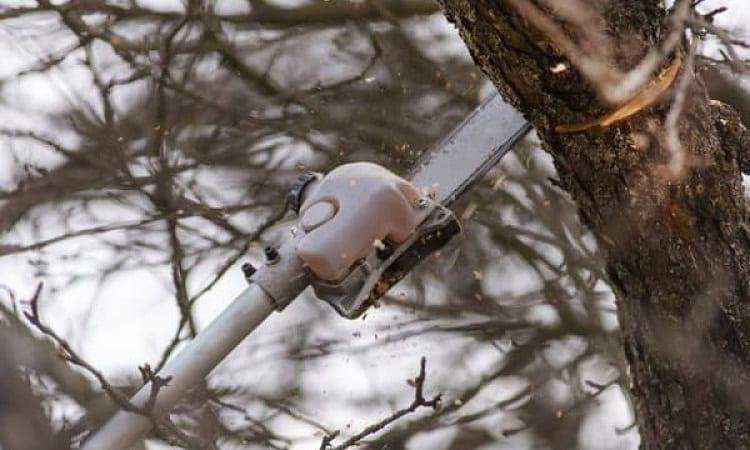
Now it’s time to really delve into all the common uses for a pole saw, with some examples of each for clarity’s sake.
Cutting Branches
The most common and non-specific use of a pole saw is simply cutting branches. This can be on a tree, a bush, a shrub, or whatever else has branches.
For the most part, a pole saw is best used on any branch that you can’t safely reach while standing flat-footed on the ground, and without having to strain. If you have to climb on a step stool or ladder or stand on the tips of your toes to reach a brand to saw, it’s always best to use a pole saw instead.
There are a lot of reasons someone may need to cut or trim a branch, which I’ll go over below, as there are different approaches involved.
Tree Trimming
Tree trimming is arguably the more common application of a pole saw. In this case, it’s important to differentiate between trimming and pruning.
For the most part, tree trimming refers to the process of removing unwanted limbs. These can be limbs that have died, are in the process of dying, or limbs that are simply in the way of something, like power lines.
Many property owners will often trim tree branches to let in more sunlight on the ground and better facilitate grass growth if there is too much foliage in the way creating excess shade throughout the day.
Damages from storms can sometimes cause issues throughout the year, whether it’s hot or cold. During warmer months, strong winds and rain can cause branches to break or crack, or even the occasional lightning strike. The same goes for hurricanes and tornadoes.
In the winter, branches are more prone to cracking because of the cold. Ice and snow storms can cause branches to crack as well, or even snap off and fall. Whatever the cause, tree trimming is the removal of any limb no longer needed for whatever reason, whether it’s damaged, in the way, or simply unwanted.
Unless the tree is short, or the unwanted branches are close to the ground, a pole saw is almost always the best way to go about removing these limbs.
Tree Pruning
Tree pruning and tree trimming can sometimes get mixed up, and that’s certainly understandable. While tree trimming is something that generally happens in response to an issue with the tree and thus happens as needed, tree pruning is something typically done annually, to prepare the tree for healthy growth for the coming warmer months ahead.
For this reason, pruning can be a lot more difficult, as it’s entirely strategic, and requires some knowledge about the tree, it’s growth patterns, and any specific methods to keep it healthy throughout the year.
Some people also refer to the practice of shaping a tree’s growth as pruning as well, and they aren’t wrong. While this is generally in reference to keeping a tree’s ideal growth shape throughout the year, it’s still technically pruning in a way.
A big part of tree pruning is deciding what branches need to be prioritized, and which ones may develop into a problem further down the line, whether that’s from sustaining unhealthy growth on injured limbs, or limbs that could end up getting in the way of others, distorting the ideal shape of the tree.
Tree pruning is complicated, difficult, and requires some knowledge on the overall process, as opposed to tree trimming, which is merely lopping off limbs that can’t be on the tree any longer. I’ll go over that in more detail below, including when to prune in the first place.
Brush Clearing
Sometimes pole saws can be used as a sort of wrecking ball for problematic growth, which doesn’t necessarily have to be a tree.
Hydraulic pole saws are popular for clearing our large brush and growths in the way of paths, construction, and whatever else is hindered by wayward vegetation and tree branches.
For this reason, clearing brush and debris with pole saws don’t require much attention to details, as one simply needs to get rid of whatever is in the way.
Pole saws used for this purpose are often the most heavy-duty available and usually mounted to a skid steer or tractor.
Conclusion
Alright then. Now you should have a much better idea as to what you’re looking for with a pole saw, and some excellent choices regardless of what type you think you might need.
I highly recommend any of the above pole saws and would have no issue with having any one of them in my shed. Just remember to consider what your main needs are, how much you’re willing to spend, and if you can handle using the saw.
Before you know it, you’ll have your property’s trees looking better than ever, and always prepared for whenever a branch or two needs to be taken care of.
Good luck!